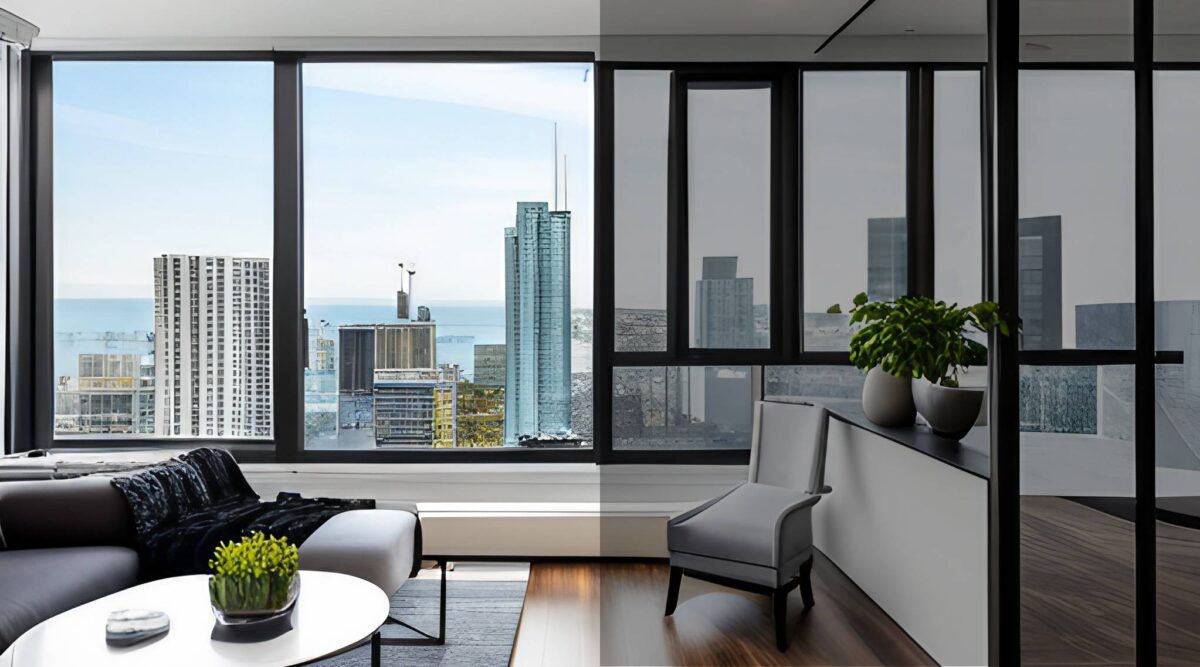
Window films are one of the most searched window upgrades in Toronto and the GTA, and the reason is simple. People want better comfort without tearing out their windows. They search for window films when rooms feel too hot in summer, too cold in winter, or when energy bills keep climbing with no clear reason.
Search trends spike after heat waves, cold snaps, and long shoulder seasons. Homeowners and business owners ask the same thing. Do window films actually work in Canada, where weather changes fast and hits hard?
This question comes up every week. Condos near King West that trap heat. Older homes in Scarborough with cold living rooms. Offices near Bay Street where desks by the glass sit empty. In most cases, the problem is not the furnace or the AC. It is the glass.
Why window films matter so much in Toronto and the GTA
Toronto weather pushes buildings year-round. Summer sun hits strong and stays long. Winter cold presses against windows for months. Spring and fall flip between warm and cold without warning.
Window films are thin layers installed on existing glass. They do not replace windows. They do not change frames. They change how heat, light, and UV pass through the glass.
Heat control window films manage solar energy. Some heat reflects away. Some heat absorbs into the film. Less heat passes indoors. This helps rooms stay closer to the thermostat setting.
This is why window films are used all year in Toronto homes, condos, offices, and retail spaces.
If you want a clear overview of how window films work and the options available, this page explains the basics well: window films.
How window films reduce summer heat inside Toronto buildings
Toronto summers are bright, humid, and long. South-facing and west-facing windows take the most sun. Untreated glass lets that solar heat move straight inside.
Most people describe the problem like this:
- One room feels much hotter than the rest
- The AC runs all day and still falls behind
- Glare makes screens hard to use
- Furniture and floors fade near windows
Heat control window films reduce solar heat before it fully enters the room. This lowers indoor heat buildup and reduces strain on cooling systems.
A west-facing condo near CityPlace had floor-to-ceiling glass and strong afternoon sun. By mid afternoon, the living room felt unusable. After installing window films built for heat control, the room cooled faster and stayed usable into the evening. Same AC. Same glass. Better comfort.
Another case involved a small restaurant in Vaughan. Large front windows made the dining area uncomfortable in summer. Guests avoided tables near the glass. After window films were installed, those seats filled again and staff noticed fewer temperature complaints.
Many people think dark film is required to block heat. That is not true. Many modern window films are clear and still reduce heat and glare.
If blocking heat and UV together is the goal, solar-focused options help. This article explains it in plain language: heat blocking and UV protection with solar film.
For simple habits that help reduce summer energy use, Toronto Hydro shares useful tips that pair well with window films: Toronto Hydro energy saving tips.
What window films actually do during Canadian winters
Winter creates the most doubt around window films. Many people worry films will block helpful sun or make rooms colder.
In winter, the main issue is heat loss. Cold glass pulls warmth out of rooms. Even sealed windows can feel drafty.
Heat control window films add resistance at the glass surface. This slows radiant heat loss and helps the glass feel less cold.
Common winter changes people notice include:
- Rooms feel more even near windows
- Glass does not feel as icy
- Heating cycles feel smoother
- Less condensation on some windows
This does not replace insulation or new windows. But it can improve comfort in many Toronto homes.
A semi-detached home in East York had older double-pane windows that could not be replaced yet. After window films were installed, the front living room stayed warmer without raising the thermostat. The difference showed up fast.
If you are deciding between window films and full replacement, this guide breaks down the difference clearly: window films vs window replacements.
Spring and fall show the steady side of window films
Shoulder seasons in the GTA are unpredictable. One day feels warm. The next feels cold. Heating and cooling systems struggle to keep pace.
Without window films, windows let outdoor temperature swings rush indoors. This creates hot and cold zones and constant thermostat changes.
Heat control window films slow these swings. Indoor temperatures feel steadier. Systems cycle less often.
An office near North York Centre saw comfort complaints spike every spring and fall. Staff avoided desks near windows. After window films were installed, complaints dropped and HVAC service calls slowed.
This season alone often convinces people that window films were worth the cost.
Are window films worth it for Toronto homes and businesses?
People often compare window films to full window replacement. Replacement costs more and takes longer. Window films install faster and cost less.
Most feedback after installation sounds like this:
- Rooms feel normal again
- Glare problems stop
- Heating and cooling feels balanced
- Energy bills feel more steady
For businesses, comfort affects how long customers stay and how staff feel during long shifts. Small changes make a big difference.
Install quality matters. Cheap film and rushed installs can fail early. This is why many property owners choose professional installation.
If you are unsure about doing it yourself, this article explains the difference clearly: DIY window films vs professional installation.
Choosing the right window films for Toronto buildings
Not all window films behave the same. Not all glass reacts the same.
Results depend on factors like:
- Single or double-pane glass
- Low-E coatings on newer windows
- Window direction and sun exposure
- Building height and nearby shade
- Condo appearance rules
A west-facing condo in Liberty Village needs a different setup than a shaded home in Richmond Hill or a storefront in Brampton.
Local experience helps avoid mistakes. Toronto buildings vary by age, layout, and glass type. One window film does not fit every case.
Window films and energy use in Canada
Energy costs keep rising. People notice it fast.
Window films help reduce cooling load in summer and slow heat loss in winter. Over a full year, this can reduce strain on heating and cooling systems.
Natural Resources Canada explains how window upgrades affect energy use. Window films support better efficiency without full replacement: Natural Resources Canada window efficiency guide.
Final thoughts on window films in Toronto and the GTA
Window films are not magic. They do not replace insulation or fix damaged windows. They solve comfort problems caused by glass.
Heat control window films work in summer, winter, and the months between. That is why window films fit Toronto weather so well.
If rooms feel too hot, too cold, or just off, the windows are a smart place to start.
A local window tinting service that understands Toronto glass types, condo rules, and seasonal shifts can help match the right window films to your space.
That is how many people improve comfort without tearing out their windows.